
Who Told You That Was True? How Other People's Labels Become Your Identity (And How To Change It)
From the moment I overheard my mother refer to me as an "accident" and a "mistake," my life seemed to reflect those words wherever I turned.
They showed up in every interaction and every relationship, at school and at work.
They determined what I tolerated and what I felt I deserved.
They affected my mental health, causing me to have low self-esteem and low self-worth, because I just just assumed I was the burden and bother I was treated as.
The dread of living with that lifelong suffering caused me to consider taking my life many times.
Now that I understand the way our brains are designed to look for evidence of what we believe in our external world, I'm glad I didn't follow-through.
Because I was never an "accident" or a "mistake." Perhaps my mother needed to believe that to avoid accountability and shame for having had me at such a young age during a time when that wasn't socially acceptable. But that didn't mean her beliefs were true.
So, if you've ever thought or felt:
"I'm not enough."
"I'm broken."
"I don't belong."
"I'm so stupid."
"I'm alone."
(Or any other negative self-perception that haunts you.)
I would ask you to consider:
What if the things you believe about yourself were never true to begin with?
You see, everything we hear and experience shapes what we believe.
So, all of the things people say to us, about us, and around us, in combination with the way they choose to treat us, are internalized as a reflection of who we are.
Those words remain in our minds, repeating until we understand them to be our own thoughts; and when those thoughts become beliefs, our brains accept them as truth.
In other words, those labels become our identity.
Recognizing that a negative belief did not originate with you is the first step towards changing it.
And wanting to change what you believe about yourself is both admirable and achievable.
But recognition and desire alone don’t change the belief, nor the way you operate.
😵You can intellectually understand that someone else was wrong about you and still hear their voice every time you attempt to make a decision.
😵You can know that you are capable and still second-guess yourself.
😵You can see the way a label was used to dismiss or degrade and still find yourself behaving as though it were true.
Because there is a difference between knowing something isn’t true and no longer operating as though it is.
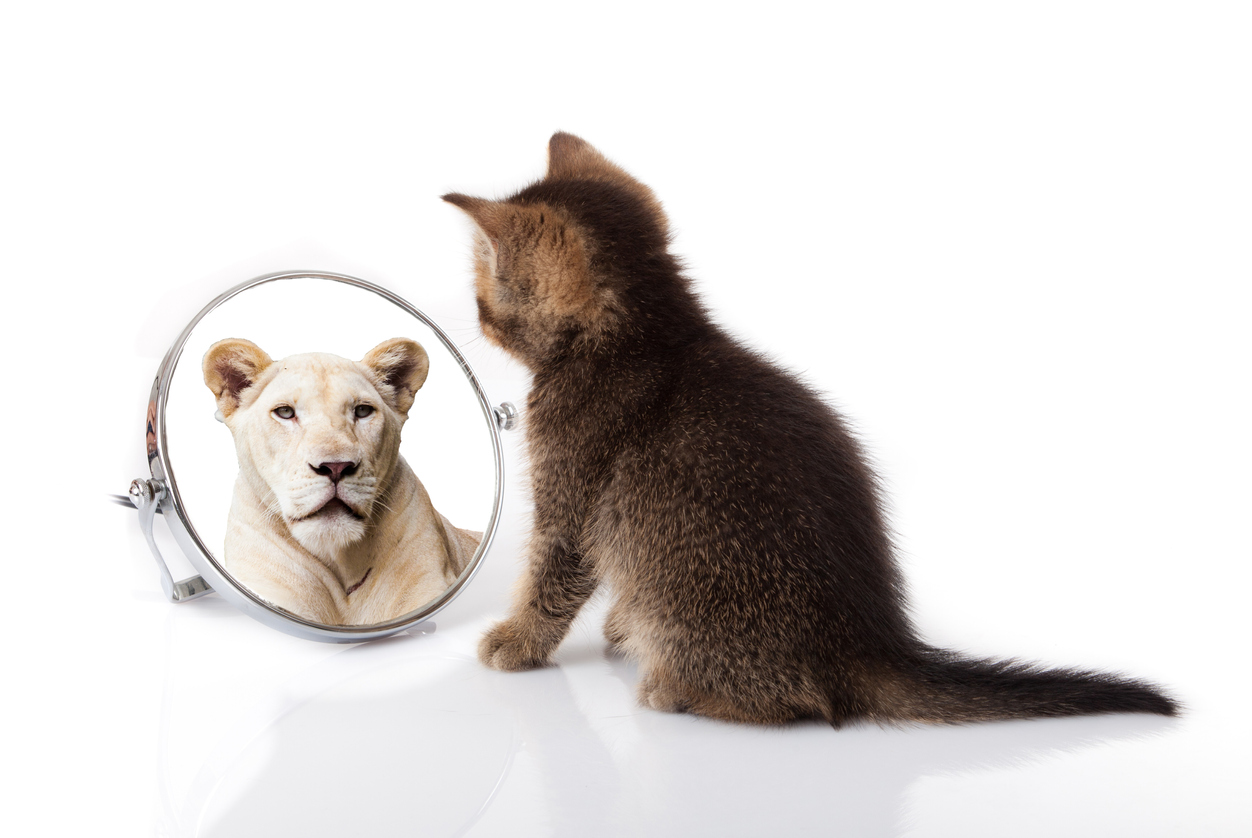
Unfortunately, standing in front of a mirror and repeating positive affirmations won't make your subconscious mind suddenly say, “Oh, good! Never mind then.”
Covering an old belief with a prettier one isn't going to change anything.
Change begins when you understand what has been driving you.
That means learning to recognize which beliefs actually belong to you, which were handed to you through someone else's criticism, expectations, fears, limitations, or perception—and then consciously deciding what gets to define you from here.
This is the work I do through my SHIFTING GEARS transformational system.
We don't simply silence negative thoughts—we look underneath them.
Because the thought you're hearing today may be connected to a belief you've been carrying for years. And that belief may be influencing the way you make decisions, establish boundaries, interpret other people's behavior, respond to rejection, pursue opportunities, and determine what you believe you deserve.
Identifying a belief is only the beginning of the work—but you can start with this.
The next time you catch yourself making a statement about who you are, particularly one that begins with “I am…”, stop and ask:
Who taught me that?
Not, Is it true?
(Not yet.)
First ask where it came from.
Then the next question is:
Do I still choose to believe them?
That's where things start getting interesting.
Because you can understand exactly why you became who you became and still find yourself reacting, choosing, shrinking, defending, or second-guessing from the same old identity.
Awareness opens the door. It doesn't walk you through it.
After years of having my identity shaped inside abuse—and then experiencing rejection and shame while I was trying to find my footing afterward—I eventually had to confront a much bigger question:
Who gets to decide who I am?
At some point, I couldn't keep waiting for another person, another family, another relationship, or another room to decide there was a place for me.
I had to belong to myself.
And so do you.
If my story resonates with you, visit danasdiaz.com to get the first 2 chapters of 📖GASPING FOR AIR: THE STRANGLEHOLD OF NARCISSISTIC ABUSE (Available on Amazon, Audible, and Kindle).
Continue the journey with📖 CHOKING ON SHAME: THE SCAPEGOAT CHILD IN A NARCISSISTIC FAMILY, which takes you through the childhood that taught me to override my needs in order to survive, thereby priming me for the abusive adult relationship relayed in GASPING FOR AIR.
Ready to Take Back the Wheel?
If you're reading this thinking, I know where some of my beliefs came from. I just don't know how to stop them from running my life, that's exactly why I created SHIFTING GEARS: Power Up.
This isn't about collecting more information about why you are the way you are.
It's about doing something with what you now know.
Power Up gives you the tools to begin changing the beliefs and patterns underneath those reactions, beginning on day one.
The goal isn't to make you dependent on my voice telling you what to believe.
It's to help you trust yours.
SHIFTING GEARS: Power Up is my $497 self-guided transformational system, so you can do this work privately and at your own pace.
You've spent enough time letting other people's beliefs ride shotgun.
It's time to decide what YOU believe—and take back the wheel.