
Harness the Power of Words: Influence & Resilience
Mindset, Influence Others, Emotional Resilience
The Power of Words: Build Your World or Burn It Down
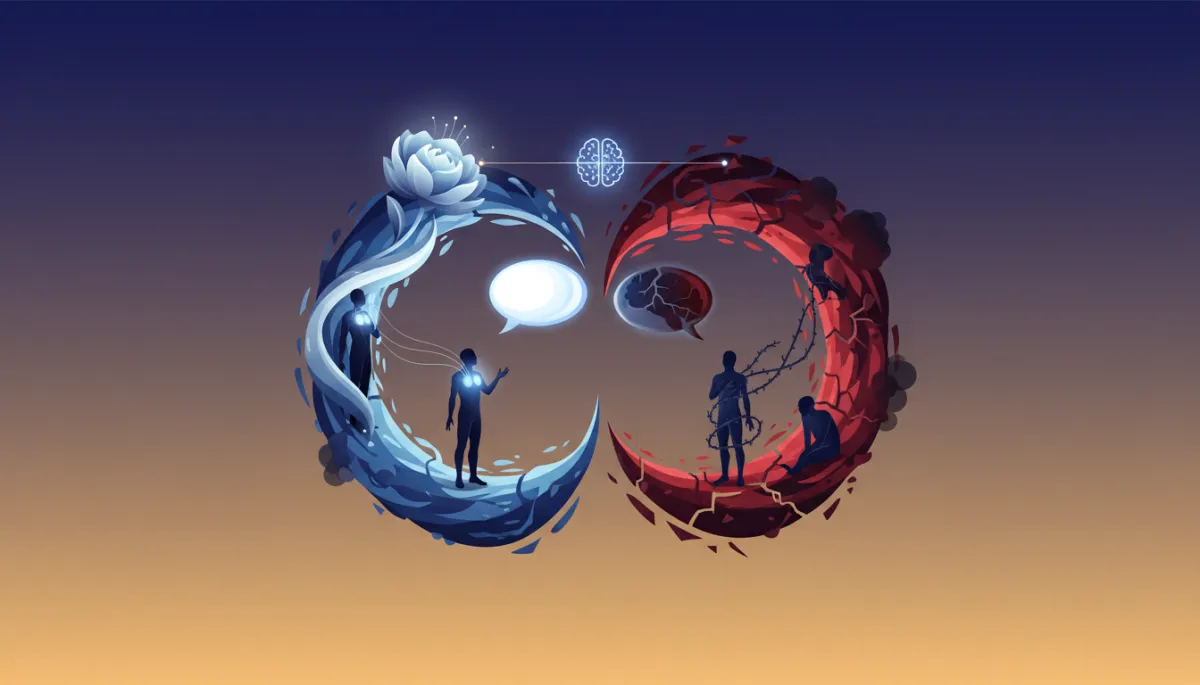
Words are not harmless noise. They are tools, weapons, and blueprints that carry the energy to create your desired result. So, every word and every sentence you speak, write, or silently think in your mind is either constructing something solid or quietly tearing something apart. This is a power we often take for granted, instead of realizing that language is like live electricity—powerful, useful, and dangerous when handled carelessly.
Words Create or Destroy—There Is No Neutral
Language shapes perception, and perception shapes reality—not just for ourselves, but also for those on the receiving end of our communication.
A single sentence—“You’ve got this” or “You’ll never make it”—can either uplift or discourage. Yet, so often, people don't realize their power to redirect a life with their unthoughtful responses. They're simply reacting to someone based on their own frame of reference, which is shaped by their own life experiences and familial, social, generational, and cultural conditioning.
Still, we need to be more aware that when we speak to someone directly or comment on social media, we are either pouring a concrete foundation for that person to build upon or swinging a wrecking ball at what they've managed to build.
So, there is no such thing as a neutral word; it either builds courage, clarity, and connection, or it feeds doubt, confusion, and distance.
The result is instantaneous, too. Spoken words impact the second they leave one's lips. Written words linger, too, remaining in inboxes, group chats, and journals, having an iterative effect every tiem they are read. Even unspoken thoughts have weight; because repeated often enough, they become the script your nervous system believes. That is how words quietly shape reality—externally in your relationships and internally in your identity.
The Brutal Truth About Self-Talk and Your Nervous System
Did you know that your brain is always listening?
The way you talk to yourself is not “just in your head”; it directly shapes the way your nervous system reacts to the words spoken to you, about you, and around you.
For example, critical self-talk and harsh thoughts keep your body on high alert (aka "survival mode"). Perhaps you've found yourself thinking “How could I be so stupid” or “I'm broken.” Negative words trigger stress responses, tighten your chest, and flood you with anxiety, just the same as if someone spoke or wrote them to you; and if those words did come from someone else, that would be considered bullying and abuse.
Over time, this inner abuse becomes a habit. The sabotaging cycle kicks into autopilot the moment you feel stressed, causing you to speak to yourself like a bully. Then your nervous system panics, and your performance drops to match the thoughts—proving your negative story “right.” The worst part is that you don't even know what you're doing and the damage you're causing as a result. (The same applies with the words you use with others, as well.)
With some self-awareness, you can make grounded, constructive communication with yourself a new habit. You just have to consciously choose more empowering words, like “This is hard, but I can figure it out." That hope and positivity calms your system, widens your options, and pulls you out of survival mode into problem-solving mode.
💡 Bold Reminder: Your nervous system does not distinguish between truth and repetition. Stop rehearsing your worst narrative, and choose to create the reality you want, instead.
Ask Yourself: Am I Creating or Destroying Right Now?
Intent matters. Before you fire off that text, deliver that “honest” opinion, or unload on yourself in the mirror, pause and ask a ruthless question: Is my intent to create or destroy?
Creating does not mean sugarcoating. It means you speak truth in a way that builds clarity, respect, and growth. The intention is to be conscientious about what you ARE creating, so as to avoid destroying; because destroying—that is, when you aim to shame, belittle, or control yourself or someone else, NEVER has a

Intentional language in journaling can rewire inner dialogue toward strength and clarity.
Being intentional with your words is not about perfection; it is about responsibility. It's about owning the impact of what leaves your mouth and what loops in your mind, so that you influence others with language that challenges without crushing, corrects without humiliating, and inspires without manipulating. That is where real power and meaningful influence build respectful and positive connections (and dare I say, are the building blocks to societal peace).
Guard Your Mind and Build Unshakable Emotional Resilience
It's sometimes difficult not to absorb every word thrown at you. So, you need to protect yourself from the harm of gossip, cruelty, and constant criticism, to prevent the harmful effects.
Set boundaries.
Walk away.
Mute, block, unfollow.
You are allowed to curate a life for yourself that demands self-respect!
At the same time, strengthen your emotional resilience by choosing how you interpret what you hear. Because you cannot control every comment, but you CAN control the meaning you give it.
Replace “They said I’m not enough, so I must be broken” with “Their words reflect their limits, not my worth.” That is constructive communication with yourself that, with enough practice, will become the automatic internal response.
Here’s the uncomfortable question:
What have you been saying to yourself so often that you’ve accidentally turned it into an identity?
“I’m not good enough.”
“I always screw things up.”
“Nobody listens to me.”
“I can’t handle this.”
“This is just who I am.”
Those aren't just words. Repeated often enough, they become beliefs—and those beliefs quietly start driving your choices, reactions, boundaries, relationships, and results.
Take my free Power Shift Diagnostic™ QUIZ to uncover the subconscious beliefs that may still be sitting behind the wheel. Once you can see what’s driving you, you can decide whether it deserves to keep taking you where you’re going.
And if you're ready to go beyond awareness and actually change the internal dialogue, SHIFTING GEARS: Power Up ($497) gives you the tools to interrupt those automatic thought loops, choose a different response, and build the self-trust to stop letting someone else’s words—or your own old conditioning—decide who you get to be.
Your words are building something. Make damn sure they’re building the life you actually want.