
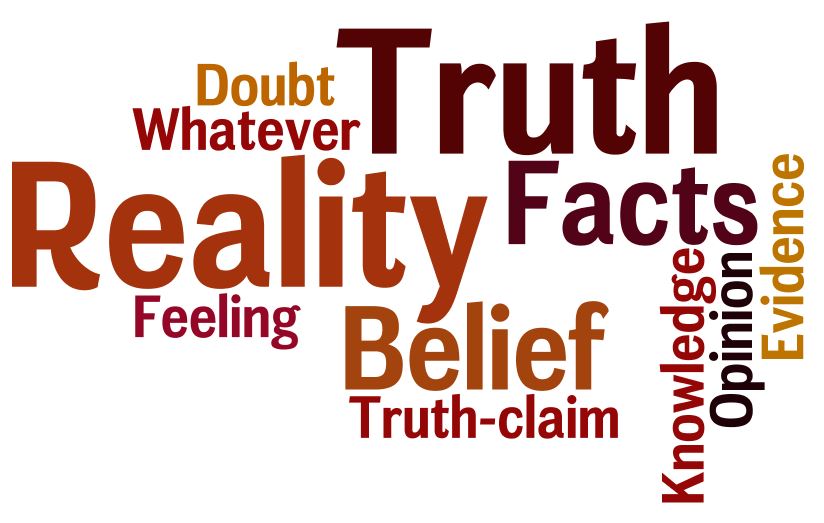
Your Perspective Isn't My Truth: When Assumptions Become Conclusions
We all interpret what we see, hear, and experience through our own unique frame of reference—one shaped by everything we have seen, heard, believed, and experienced before.
Those different perspectives can lead to wondrous insights. They allow us to learn from one another, create collaboratively, challenge our thinking, and grow as individuals.
But what happens when someone’s perspective leads to harmful behavior?
Someone reads or hears something. They assign meaning to it based on their own frame of reference. They make judgments about the person who said or wrote it. Then, without exploring that person’s intention or inviting an explanation, they decide their interpretation justifies treating that person accordingly.
That’s where perspective can become dangerous.
Our brains don’t experience reality as some pristine, objective recording. They interpret incoming information through existing beliefs, expectations, memories, emotions, and previous experiences.
And once we form an interpretation, confirmation bias can make us more likely to notice information that supports what we already believe while discounting information that contradicts it.
So:
Something happens → I interpret it → I believe my interpretation → my belief influences my behavior → my behavior affects someone else.
That behavior might include:
Publicly criticizing someone
Excluding them
Gossiping
Spreading rumors
Retaliating
Leaving a nasty review
Sending an accusatory or provocative message
Convincing others to dislike someone
Encouraging others to participate in harmful behavior
When our interpretation begins producing consequences in somebody else’s life, I think we need to ask a bigger question:
At what point does perspective become responsibility?
My answer?
When we act upon it.
We’re entitled to our perceptions.
We’re entitled to our feelings.
We’re entitled to our opinions about other people and about the things they say and do.
We’re even entitled to decide we no longer want a relationship with someone—even if that person is family.
But the moment we begin doing something to another human being based on an assumption about who they are, what they believe, or what we believe they intended, our responsibility for our own conduct increases.
Especially when we could have simply asked:
“What did you mean?”
Or:
“Can we talk about what you said—or what you wrote?”
Having a mature conversation doesn’t require agreement. It doesn’t require forgiveness, acceptance, reconciliation, or even a continued relationship.
It simply creates respectful space for both people to provide context, ask questions, and share their truth.
But too often, curiosity never gets the chance.
I’ve watched people—including people I know and love deeply—become so consumed by offense, judgment, or even someone else’s perceived downfall that they manufacture entire realities from incomplete information.
And once they decide that reality is true, they begin behaving according to the reality they invented.
They withdraw.
They become cold.
They retaliate.
They gossip.
They overexplain.
They people-please.
They end relationships.
They decline invitations.
They attack.
They defend.
Sometimes, our reaction even creates a reaction in the other person that appears to validate the very assumption we started with.
And around we go.
Because our behavior doesn’t happen in a vacuum.
Every action has the potential to create a reaction—and some of those reactions we will never see.
We cannot possibly know everything another person is carrying.
We don’t know what someone is questioning about themselves.
We don’t know whether they’re struggling with belonging, confidence, self-worth, loneliness, anxiety, depression, grief, or something they’ve told absolutely no one about.
That does not mean we are responsible for another person’s mental health.
And it certainly doesn’t mean we should walk through life terrified that saying the wrong thing will somehow damage another human being.
But when our actions are deliberately intended to hurt, humiliate, isolate, punish, or destroy another person, “That’s what I believed” is not a free pass from accountability for our own behavior.
Words and actions can have consequences we may never fully see.
And that matters.
So, are we responsible for the outcome of every action we take?
No.
We cannot control how another person interprets our words.
We cannot control how another person feels.
We cannot control what another person chooses to believe about themselves—or about us.
But we are responsible for our own conduct.
Regardless of what you believe…
Regardless of what somebody told you…
Regardless of what somebody else has said or done…
YOUR integrity, YOUR character, and YOUR morality are demonstrated by what YOU choose to do.
And guess what?
➡️ Just because you believe something DOESN’T MAKE IT TRUE.
➡️ Just because someone you trust tells you something DOESN’T MAKE IT TRUE.
➡️ Just because everyone else has decided to believe something DOESN’T MAKE IT TRUE.
So let curiosity come before conviction.
Ask a few questions before turning an interpretation into a so-called truth.
And before you treat another human being according to something you think you know, consider whether you actually know it at all.
Because…
Perspective becomes dangerous when we mistake it for truth. 😵
💻 Ready to Question What You’ve Been Calling “Truth”?
Your beliefs shape the way you interpret what happens around you—and those interpretations influence the choices you make, the boundaries you set, the relationships you build, and ultimately, the life you create.
So maybe it’s time to get curious about what’s been driving you.
START THE SHIFT — SHIFTING GEARS Jumpstart ($47)
A fast, actionable reset to help you recognize what’s been driving you, strengthen your boundaries and confidence, and start making more conscious choices.
DEEPEN THE SHIFT — SHIFTING GEARS Power Up ($497)
A deeper self-guided transformation to rewrite the beliefs driving your patterns, strengthen self-trust, and intentionally become the person capable of creating the life you actually want.
Because the most important perspective you may ever question is the one you’ve been using to define yourself.
Explore SHIFTING GEARS and choose where you want to begin.